

The Best Developers Don't Just Write Code — They Think Like Project Managers
When most people think about a software developer, they imagine someone sitting in front of a laptop writing thousands of lines of code.
That's only part of the story.
As your career grows, you'll realize something important:
The developers who create the biggest impact aren't always the ones who write the best code.
They're the ones who understand projects, people, priorities, and business goals.
In other words...
They begin thinking like project managers.
And no—you don't need the official title to develop this mindset.
Writing Code Is Easy. Building Products Is Hard.

When I first started programming, I thought success was measured by how many features I could build.
If the application worked, I considered the project finished.
But real-world software development taught me something different.
A successful product isn't judged by clean code.
It's judged by whether it solves the right problem.
That requires much more than programming.
You need to understand:
Business objectives
User expectations
Deadlines
Team collaboration
Project priorities
Suddenly, coding becomes only one piece of a much larger puzzle.
Great Developers Always Think About the Bigger Picture
One habit I've noticed among senior engineers is this:
Before writing code, they ask questions.
Not technical questions.
Business questions.
For example:
Why are we building this feature?
Who will use it?
What's the business impact?
Is there a simpler solution?
What happens if we don't build it?
These questions save companies far more time than writing another hundred lines of code.
Planning Is a Superpower
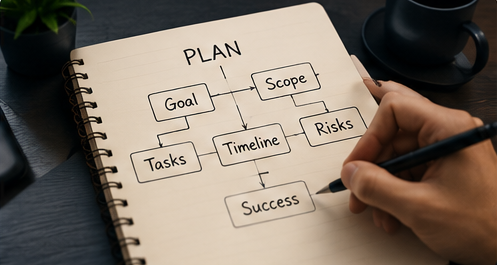
Many junior developers immediately open their IDE.
Experienced developers often open a notebook first.
Why?
Because planning prevents unnecessary work.
Before coding, try answering:
What problem are we solving?
What's the MVP?
What are the risks?
Which tasks should be prioritized?
How will success be measured?
Spending thirty minutes planning can save days of development.
Communication Is More Valuable Than Perfect Code

One of the biggest surprises in software development is this:
Technical skills get you hired.
Communication helps you grow.
Every software project involves multiple people:
Designers
Product Managers
QA Engineers
Clients
Marketing Teams
Stakeholders
If you can't explain your ideas clearly, even great technical work can be misunderstood.
The best developers know how to translate technical complexity into simple language everyone understands.
Every Project Has Constraints
In an ideal world, we'd build everything perfectly.
Reality is different.
Every project has limits:
Budget
Time
Resources
Team capacity
Client expectations
Professional developers learn to balance these constraints instead of fighting them.
Sometimes shipping a good solution today creates more value than delivering a perfect solution three months late.
Risk Management Isn't Just for Project Managers

Imagine this situation.
You're adding a new feature.
You ask yourself:
"What could break?"
That simple question is risk management.
Experienced developers constantly think ahead.
They consider:
Performance
Security
Scalability
Maintainability
User experience
Thinking proactively is one of the biggest differences between junior and senior engineers.
Time Management Matters More Than You Think

Being productive isn't about working longer hours.
It's about knowing what deserves your attention.
Great developers understand:
Not every task has the same priority.
Learning how to estimate work, manage deadlines, and communicate delays professionally is part of becoming a trusted engineer.
Leadership Starts Before You Become a Team Lead
Many people believe leadership begins after receiving a promotion.
I disagree.
Leadership starts when you:
Help teammates.
Share knowledge.
Take responsibility.
Solve problems without being asked.
Keep the project moving forward.
You don't need a manager title to become a leader.
Why Every Developer Should Learn Basic Project Management
You don't need a PMP certification.
You don't need to become a Scrum Master.
But understanding basic project management principles will help you:
Build better products.
Work more efficiently.
Communicate with stakeholders.
Earn your team's trust.
Grow faster in your career.
Project management isn't replacing technical skills.
It's multiplying them.
The longer I work in technology, the more I realize that successful software development isn't just about writing elegant code.
It's about understanding people, solving meaningful problems, and delivering value.
That's exactly what project managers do.
And that's why the best developers naturally develop project management thinking—even if they never officially become project managers.
Because in the end...
Great developers don't just build software.
They build successful projects.