
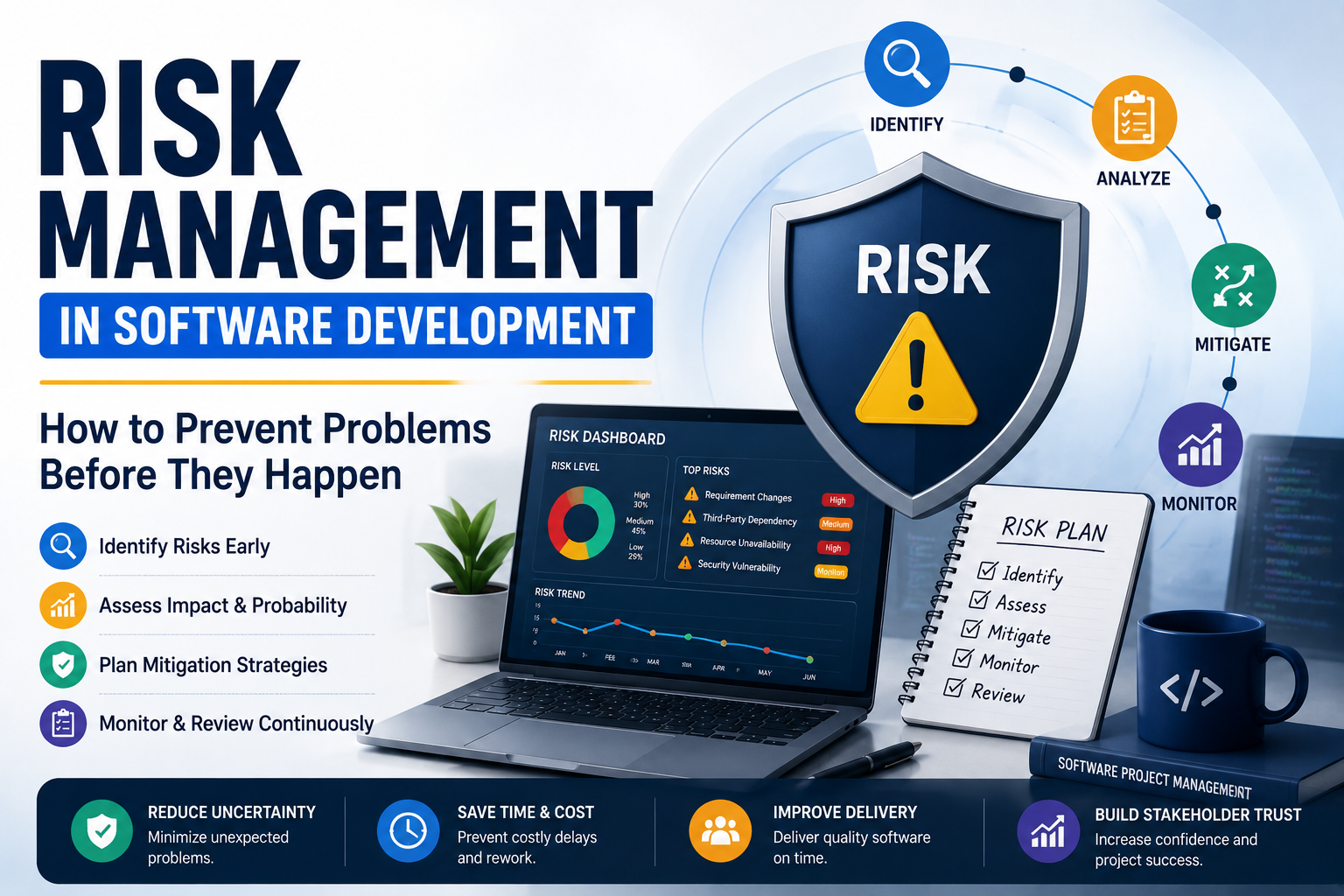
Risk Management in Software Development: How to Prevent Problems Before They Happen
Every software project begins with optimism.
The requirements seem clear.
The timeline looks achievable.
The team is motivated.
Everyone believes the project will be delivered successfully.
Yet as development progresses, unexpected problems often appear.
A key developer resigns.
The client changes the requirements.
A third-party API suddenly changes its pricing.
Critical bugs are discovered just before deployment.
The deadline becomes increasingly difficult to achieve.
These situations are common in software development.
What separates successful teams from unsuccessful ones is not the absence of problems.
It is their ability to anticipate risks before they become real issues.
This is why Risk Management is one of the most valuable skills every Project Manager, Software Engineer, Product Owner, and Tech Lead should develop.
In this guide, you'll learn how software teams identify, assess, prioritize, and manage project risks before they impact delivery.
What Is Risk Management?
Risk Management is the process of identifying potential events that could negatively affect a project and preparing strategies to reduce their impact.
A risk is not a problem.
A risk is something that might happen in the future.
For example:
"The payment gateway provider may change its API before launch."
This is a risk.
If the API actually changes and breaks your application, it becomes an issue.
The goal of Risk Management is to reduce surprises.
Why Risk Management Matters
Many software projects fail because teams only react after problems occur.
By then, fixing the issue is usually more expensive and time-consuming.
Effective Risk Management helps teams:
Reduce project uncertainty.
Improve planning accuracy.
Protect project budgets.
Increase delivery confidence.
Build stakeholder trust.
Prevent costly delays.
Good Project Managers spend time preparing for problems they hope will never happen.
Common Risks in Software Development
Every software project faces different challenges.
However, several risks appear repeatedly.
Requirement Changes
Changing business requirements can significantly affect project scope, timeline, and budget.
Technical Complexity
New technologies, legacy systems, or unfamiliar architectures increase development uncertainty.
Resource Risks
Examples include:
Team members resigning.
Lack of technical expertise.
Unexpected sick leave.
Limited project resources.
Schedule Risks
Projects often underestimate the effort required for testing, integration, deployment, and bug fixing.
Third-Party Dependency Risks
Many modern applications depend on external services such as:
Payment gateways
Cloud providers
Authentication services
AI APIs
SMS providers
Any disruption from these services may affect the project.
Security Risks
Cybersecurity threats continue to increase every year.
Poor security practices can lead to:
Data breaches
Unauthorized access
Financial losses
Reputation damage
Quality Risks
Insufficient testing often results in software defects reaching production.
Fixing bugs after deployment is significantly more expensive than preventing them during development.
Step 1: Identify Risks Early
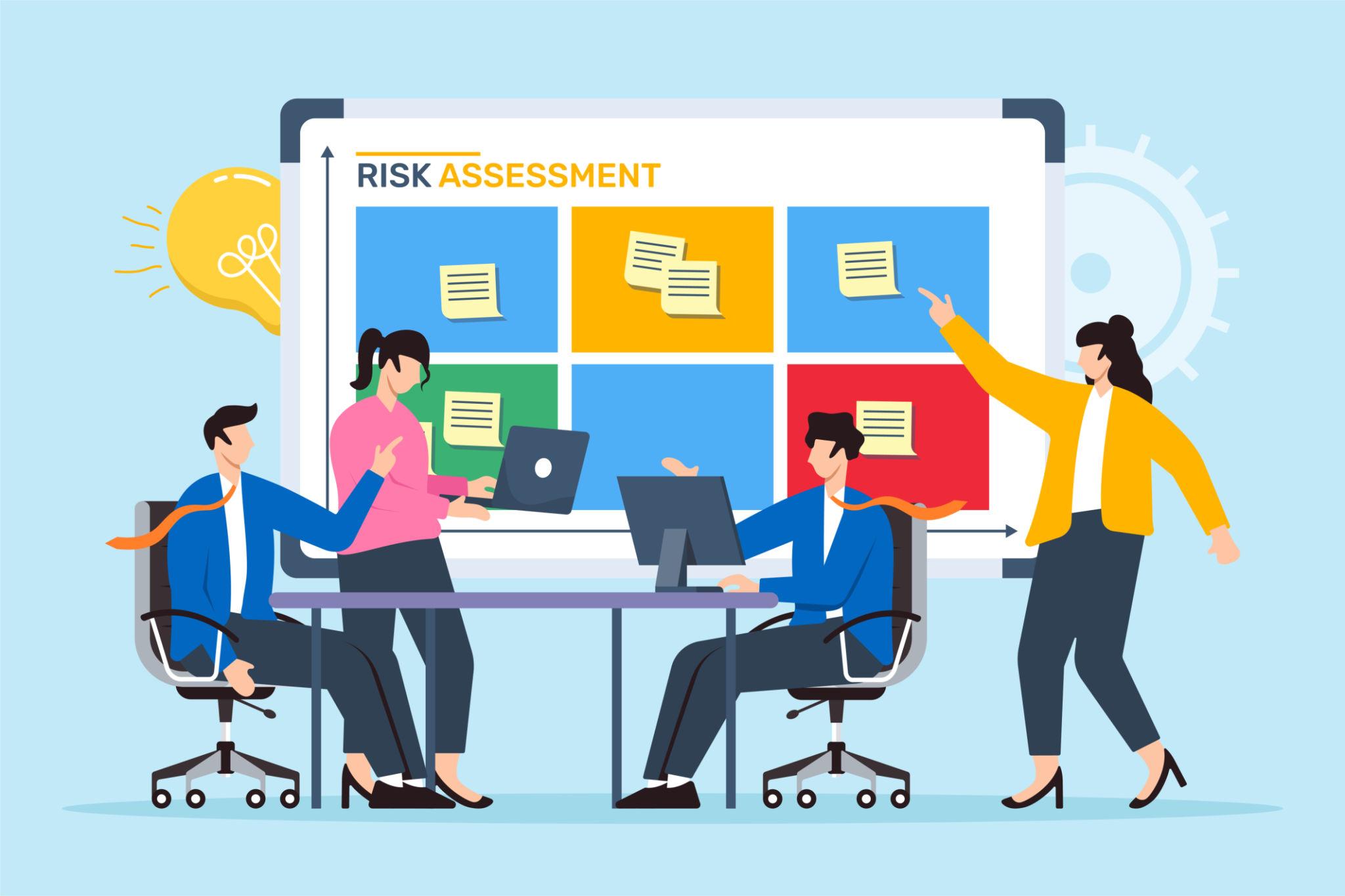
Risk identification should begin as early as possible.
Ask questions like:
What could go wrong?
Which assumptions may prove incorrect?
Which dependencies are outside our control?
What happens if the client changes requirements?
Which tasks have the highest uncertainty?
Encourage the entire team to participate.
Developers, QA engineers, designers, and business analysts often identify different types of risks.
Step 2: Assess Risk Probability and Impact
Not every risk deserves the same attention.
A common method is using a Probability–Impact Matrix.
Probability | Impact | Priority |
|---|---|---|
High | High | Critical |
High | Low | Medium |
Low | High | Medium |
Low | Low | Low |
Prioritize risks that are both likely to happen and capable of causing major disruption.
Step 3: Create a Risk Register
Professional Project Managers maintain a Risk Register throughout the project.
A simple Risk Register includes:
Risk | Probability | Impact | Owner | Mitigation |
|---|---|---|---|---|
API changes | High | High | Tech Lead | Monitor API updates |
Scope changes | Medium | High | PM | Change Request Process |
Key developer leaves | Low | High | Engineering Manager | Knowledge sharing |
Keeping risks documented ensures they remain visible instead of being forgotten.
Step 4: Plan Risk Responses
There are four common strategies for managing risks.
1. Avoid
Eliminate the source of the risk.
Example:
Choose a proven technology instead of an experimental framework.
2. Mitigate
Reduce the likelihood or impact.
Example:
Perform frequent code reviews to reduce quality issues.
3. Transfer
Move the responsibility to another party.
Example:
Purchase cyber insurance or use managed cloud services.
4. Accept
Some risks are unavoidable.
Instead of eliminating them, prepare contingency plans.
Acceptance is appropriate for low-impact risks.
Risk Management Throughout the Software Development Lifecycle
Risk Management should continue throughout every project phase.
During Requirements
Identify unclear requirements.
Validate business objectives.
During Design
Review architecture decisions.
Evaluate technical feasibility.
During Development
Monitor technical debt.
Review coding quality.
During Testing
Identify quality risks.
Validate system stability.
During Deployment
Prepare rollback plans.
Monitor production environments.
Risk Management is not a one-time meeting.
It is a continuous activity.
The Difference Between Risks and Issues
Many beginners confuse risks with issues.
Here's the difference:
Risk | Issue |
|---|---|
Has not happened yet | Already happening |
Future possibility | Current problem |
Managed proactively | Solved immediately |
Good teams spend more time managing risks than solving crises.
Best Practices
Successful software teams usually:
Review risks every Sprint.
Update the Risk Register regularly.
Encourage open communication.
Document lessons learned.
Monitor third-party services.
Perform security reviews.
Include contingency planning.
Risk Management improves with continuous practice.
Real-World Example
Imagine your team is developing an e-commerce platform.
Possible risks include:
Payment gateway downtime.
Cloud infrastructure outages.
Product requirement changes.
High holiday traffic.
Security vulnerabilities.
Delayed client approvals.
Instead of waiting for these events, the team prepares solutions beforehand.
For example:
Backup payment providers.
Auto-scaling cloud infrastructure.
Weekly requirement reviews.
Security penetration testing.
Rollback deployment strategy.
Preparation dramatically reduces project disruption.
Why Risk Management Builds Better Projects
Projects rarely fail because of one catastrophic mistake.
Most failures happen because small risks accumulate over time.
Teams ignore warning signs.
Communication breaks down.
Dependencies become overlooked.
Eventually, small problems become major project issues.
Risk Management helps prevent this chain reaction.
It gives teams the confidence to make informed decisions, adapt to change, and deliver software more reliably.
Conclusion
No software project is completely risk-free.
Unexpected events will always occur.
However, teams that identify risks early, assess their impact, document mitigation plans, and continuously monitor project health are far more likely to deliver successful outcomes.
Remember:
Successful Project Managers don't predict the future.
They prepare for it.
Frequently Asked Questions
What is the biggest risk in software development?
Changing requirements are among the most common risks because they affect scope, budget, timeline, and stakeholder expectations.
What is a Risk Register?
A Risk Register is a document used to record project risks, their probability, impact, mitigation strategies, ownership, and current status.
How often should project risks be reviewed?
For Agile teams, risks should ideally be reviewed during every Sprint, Sprint Review, or Sprint Retrospective to ensure mitigation plans remain effective.