

Stakeholder Management for Software Projects: A Practical Guide
Many software projects fail for reasons that have nothing to do with technology.
The code may be clean.
The architecture may be scalable.
The developers may deliver every feature on time.
Yet the project can still be considered a failure.
Why?
Because the people involved—the stakeholders—were not properly managed.
Successful software projects are not built solely through great coding. They are built through effective communication, shared expectations, and strong collaboration.
This is where Stakeholder Management becomes one of the most valuable skills for every Project Manager, Software Engineer, Product Owner, and Tech Lead.
In this guide, you'll learn what stakeholder management is, why it matters, practical frameworks you can use, and common mistakes to avoid.
What Is Stakeholder Management?
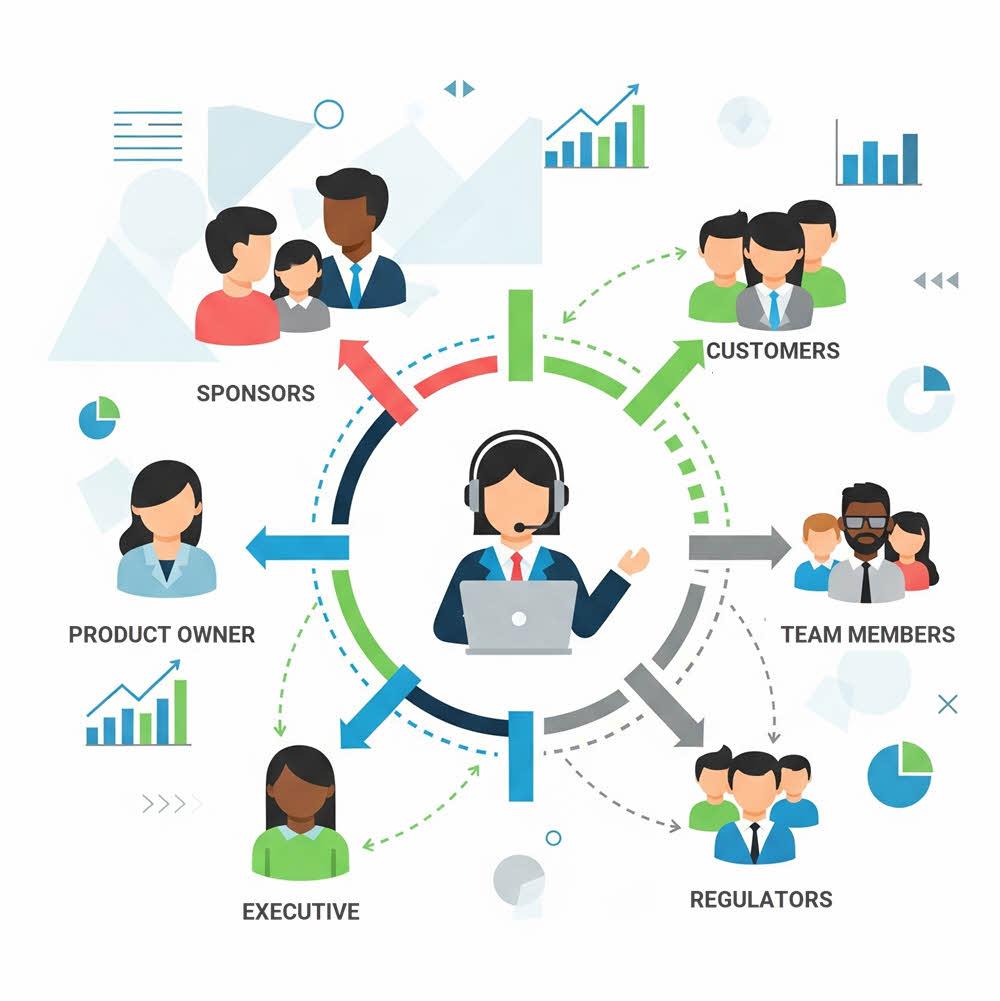
Stakeholder Management is the process of identifying, understanding, communicating with, and managing everyone who can influence—or be affected by—a software project.
Stakeholders are not only clients.
They include everyone whose interests are connected to the project's success.
Good stakeholder management ensures that expectations remain aligned throughout the project lifecycle.
Instead of reacting to problems, teams proactively build trust through communication and transparency.
Who Are the Stakeholders in a Software Project?
Every project has different stakeholders.
However, the most common include:
Client
The person or organization paying for the project.
They define business goals and measure project success.
End Users
The people who will actually use the software.
Their feedback often determines whether the product succeeds or fails.
Project Manager
Responsible for planning, communication, risk management, and project delivery.
The Project Manager acts as the bridge between technical and business teams.
Developers
Developers transform business requirements into working software.
Their technical expertise directly impacts project quality.
UI/UX Designers
Designers ensure the product is intuitive, accessible, and user-friendly.
Quality Assurance (QA)
QA engineers verify that the software meets quality standards before release.
Business Analysts
Business Analysts translate business needs into clear software requirements.
Executive Sponsors
Executives provide strategic direction, funding, and organizational support.
Keeping them informed is essential for long-term project success.
Why Stakeholder Management Matters
Poor stakeholder management creates problems such as:
Misunderstood requirements
Scope creep
Delayed approvals
Conflicting priorities
Communication breakdowns
Low customer satisfaction
In contrast, strong stakeholder management helps teams:
Make faster decisions
Reduce project risks
Improve collaboration
Build trust
Deliver higher business value
Software development is as much about people as it is about technology.
Step 1: Identify Your Stakeholders
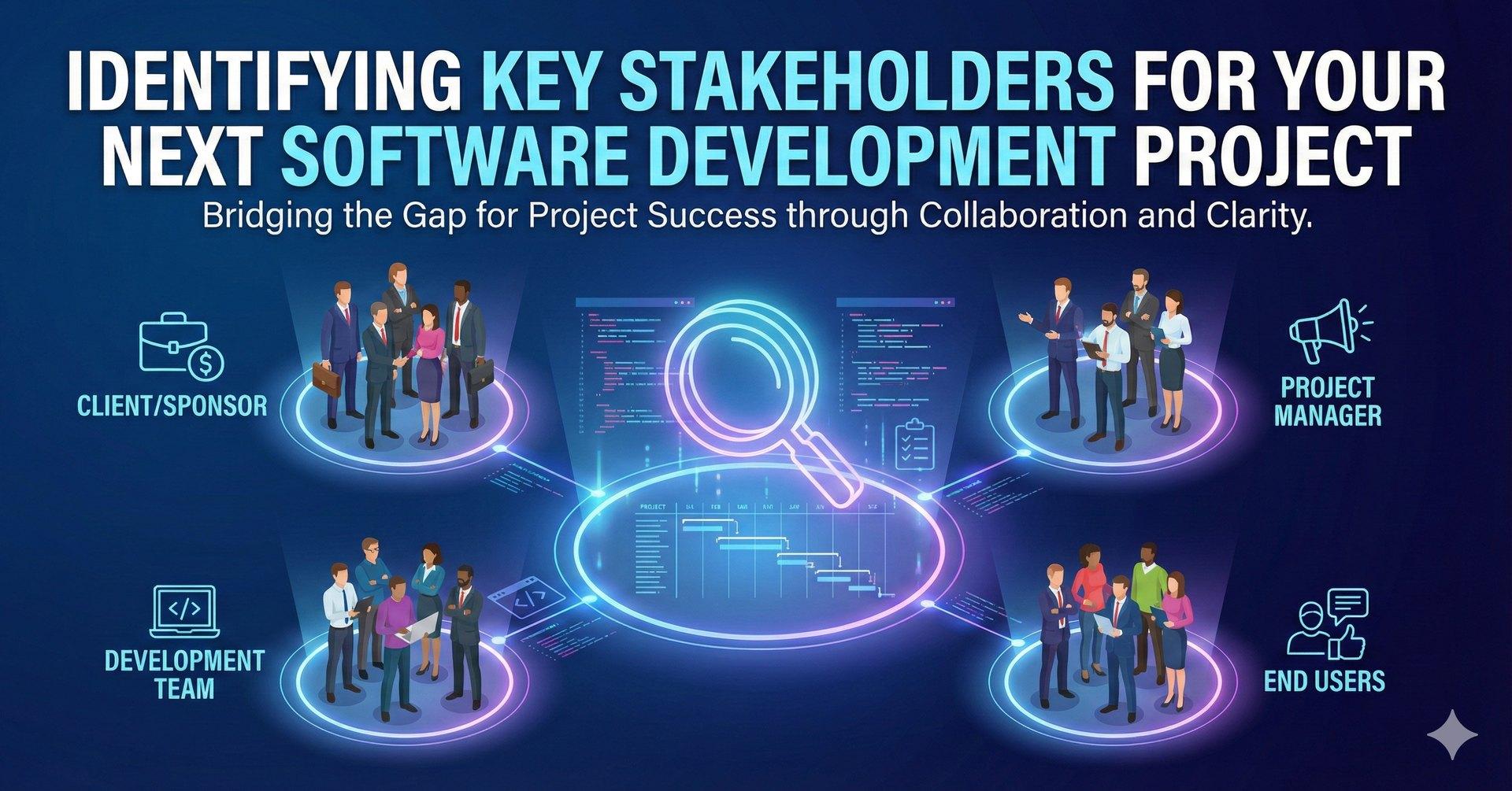
The first step is identifying everyone who has an interest in the project.
Ask questions like:
Who funds the project?
Who approves requirements?
Who uses the software?
Who supports the product after launch?
Who could block project progress?
Create a stakeholder list before development begins.
Missing an important stakeholder early can become a costly problem later.
Step 2: Analyze Stakeholders
Not every stakeholder requires the same level of attention.
A common approach is the Power-Interest Matrix.
Stakeholder Type | Strategy |
|---|---|
High Power + High Interest | Manage Closely |
High Power + Low Interest | Keep Satisfied |
Low Power + High Interest | Keep Informed |
Low Power + Low Interest | Monitor Occasionally |
This simple framework helps prioritize communication efforts.
Step 3: Understand Stakeholder Expectations
Different stakeholders often want different outcomes.
For example:
The client wants business value.
Developers want technical quality.
Executives want return on investment.
End users want an easy-to-use product.
Understanding these expectations helps prevent unnecessary conflicts.
Step 4: Build a Communication Plan
Communication is one of the biggest reasons software projects succeed—or fail.
A communication plan should answer:
Who needs updates?
What information should be shared?
How often should updates be provided?
Which communication channel should be used?
Examples include:
Weekly project reports
Sprint Reviews
Daily Scrum
Email updates
Slack or Microsoft Teams
Project dashboards
For teams already using Jira, a shared roadmap view can make stakeholder updates clearer by showing timelines, milestones, and dependencies in one place.
Consistency is more important than frequency.
Step 5: Manage Expectations
One of the biggest mistakes in project management is promising more than the team can deliver.
Instead of saying:
"We'll finish everything next week."
Say:
"Based on our current progress, these features are planned for next week, while the remaining items will require another Sprint."
Transparent communication builds long-term trust.
Handling Difficult Stakeholders
Every project eventually encounters challenging stakeholders.
Some may:
Frequently change requirements.
Request unrealistic deadlines.
Avoid giving feedback.
Delay approvals.
Introduce new priorities unexpectedly.
The solution is rarely confrontation.
Instead:
Listen carefully.
Clarify expectations.
Document decisions.
Focus discussions on project objectives.
Use data instead of assumptions.
Professional communication solves more problems than technical arguments.
Stakeholder Management in Agile Projects
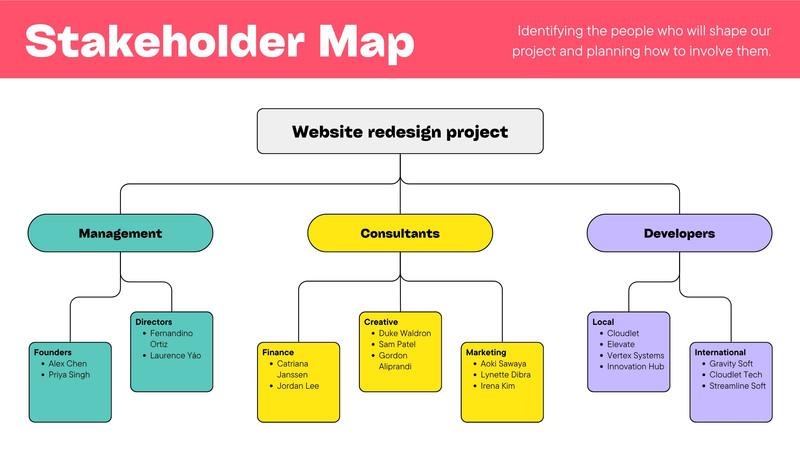
Agile encourages continuous stakeholder involvement.
Examples include:
Sprint Reviews
Product Backlog Refinement
Sprint Planning
User Feedback Sessions
Product Demonstrations
Instead of waiting until project completion, Agile teams collect feedback throughout development.
This significantly reduces project risk.
Common Mistakes
Avoid these common mistakes:
Communicating only when problems occur.
Assuming everyone understands technical language.
Ignoring end users.
Failing to document decisions.
Treating every stakeholder the same.
Overpromising delivery dates.
Forgetting executive updates.
Successful stakeholder management is proactive—not reactive.
Real-World Example
Imagine your team is developing an online healthcare appointment platform.
Stakeholders include:
Hospital Management
Doctors
Patients
Developers
QA Engineers
Government Regulators
Payment Providers
Each stakeholder has different priorities.
Doctors want scheduling efficiency.
Patients want a simple booking experience.
Management wants operational improvements.
Government agencies focus on compliance.
Without structured stakeholder management, conflicting expectations could delay the entire project.
Best Practices
Successful Project Managers often:
Identify stakeholders early.
Maintain a stakeholder register.
Update communication regularly.
Listen more than they speak.
Resolve conflicts quickly.
Keep expectations realistic.
Document important decisions.
Build trust through transparency.
Stakeholder management is an ongoing process—not a one-time activity.
Why Great Communication Wins Projects
Technical skills help build software.
Communication helps deliver successful projects.
Many experienced Project Managers say they spend more time communicating than managing schedules.
That's because people—not code—make project decisions.
When stakeholders trust your team, collaboration becomes easier, risks decrease, and project outcomes improve.
Conclusion
Stakeholder Management is one of the most important skills in modern software project management.
It connects technical execution with business success.
By identifying stakeholders, understanding their expectations, communicating consistently, and building trust throughout the project, teams can dramatically improve delivery outcomes.
Remember:
Projects are not successful simply because the software works.
Projects are successful because the right people receive the right solution at the right time.
Frequently Asked Questions
Who is considered a stakeholder in a software project?
Anyone who can influence or is affected by the project, including clients, end users, developers, Project Managers, QA engineers, executives, and business analysts.
Why is stakeholder communication important?
Effective communication reduces misunderstandings, improves collaboration, manages expectations, and minimizes project risks.
What is the best stakeholder management tool?
There is no single best tool. Many Project Managers use stakeholder registers, Power-Interest Matrices, Jira, Microsoft Project, Trello, Asana, and communication platforms like Slack or Microsoft Teams.