Technology and Scientific Work Exhibition: My Experience Showcasing a Technology Project in College
There are many things we can learn during college beyond what we find in the classroom.
From completing assignments and building projects to joining organizations and participating in technology-related events, college gives us plenty of opportunities to gain practical experience.
One of the experiences that I still remember quite well was participating in a Technology and Scientific Work Exhibition during my college years.
It was an interesting opportunity to see how a technology project could go beyond being just a college assignment. Instead, it could be presented, demonstrated, discussed, and introduced to other people.
In this article, I want to share a little bit about that experience and some of the lessons I took away from it.
What Is a Technology and Scientific Work Exhibition?
In simple terms, a Technology and Scientific Work Exhibition is an event where various projects, innovations, and scientific or technology-related works are showcased.
For students, an exhibition like this is not simply about building a project.
We also need to think about how the project can be:
Presented clearly
Explained to visitors
Demonstrated effectively
Connected to real-world benefits
Discussed through questions and feedback
And honestly, I think this is what makes an exhibition interesting.
Because building a project and explaining that project to other people are two completely different skills.
From a College Project to Something Worth Showcasing
When we're still in college, it's easy to think:
"As long as the project is finished, we're good."
I've definitely had that mindset before.
When working on a project, our first priority is usually making sure that everything works according to the requirements and that we can finish it on time.
But once that project is brought into an exhibition, the way we think about it starts to change.
A project that was previously seen only by lecturers or teammates now needs to be understandable to people who may know absolutely nothing about how it was built.
Suddenly, the questions become different:
What problem does this project solve?
How does the technology work?
What is it useful for?
Why was this project created?
And perhaps the most important question:
How can we explain it in a way that anyone can understand?
The Atmosphere at the Exhibition Booth
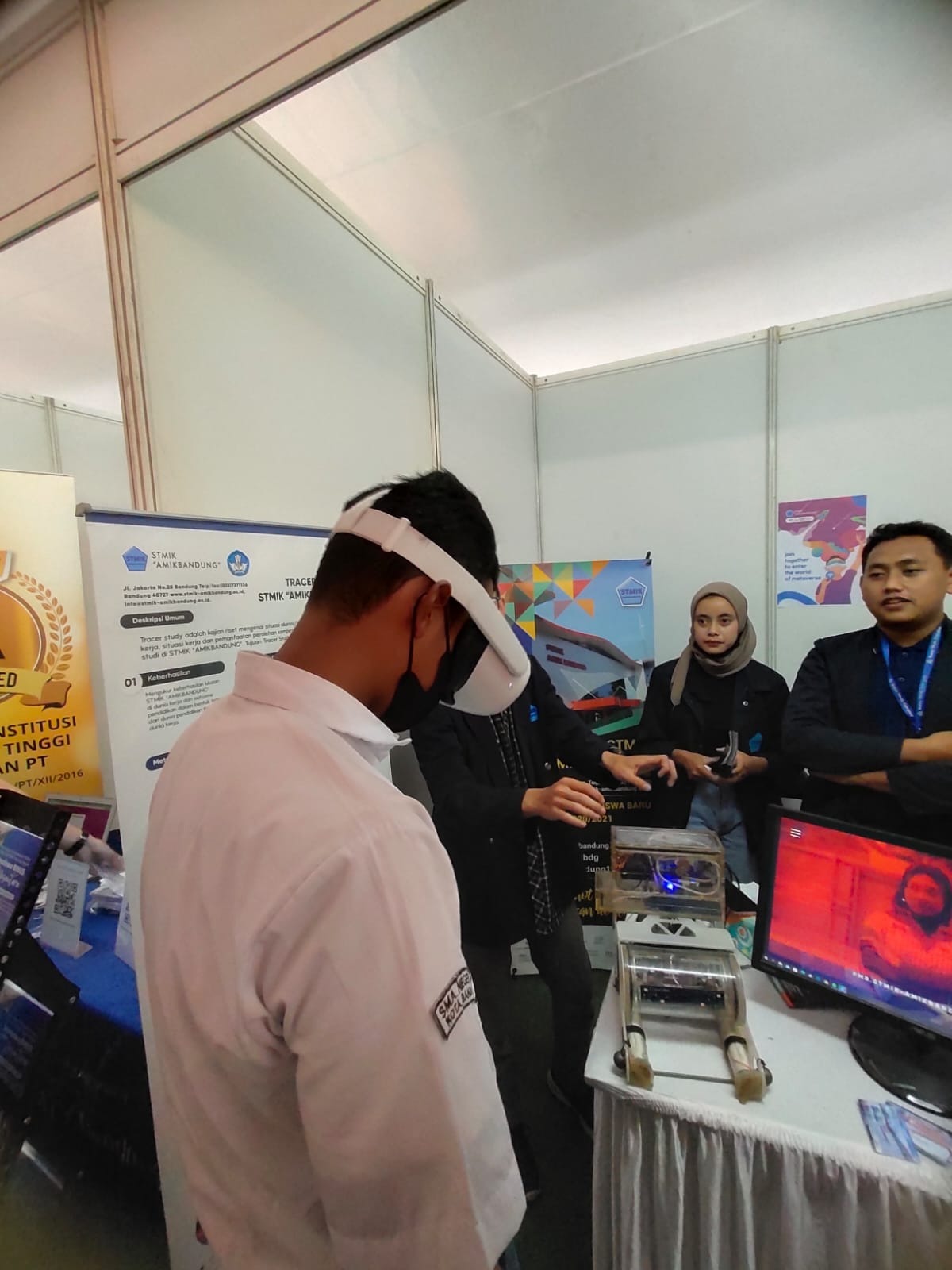
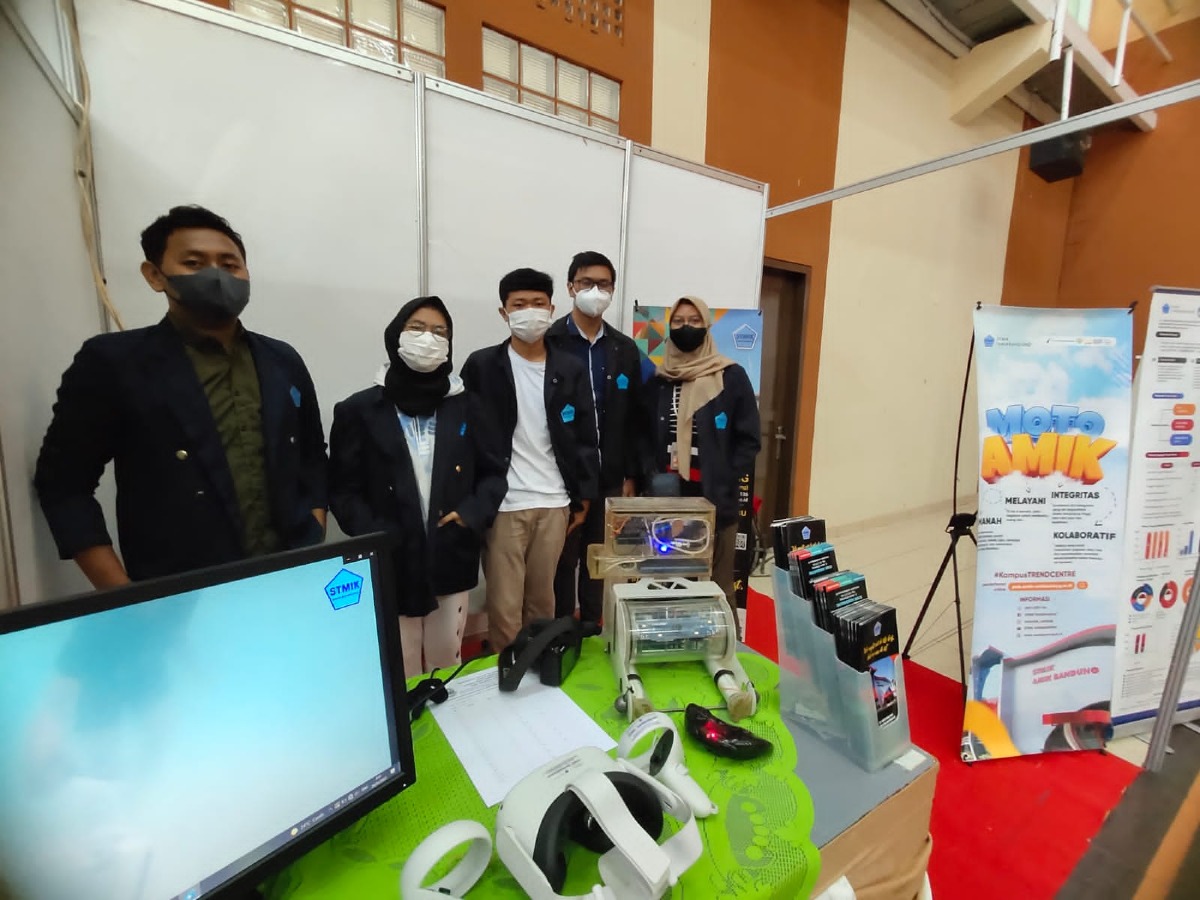
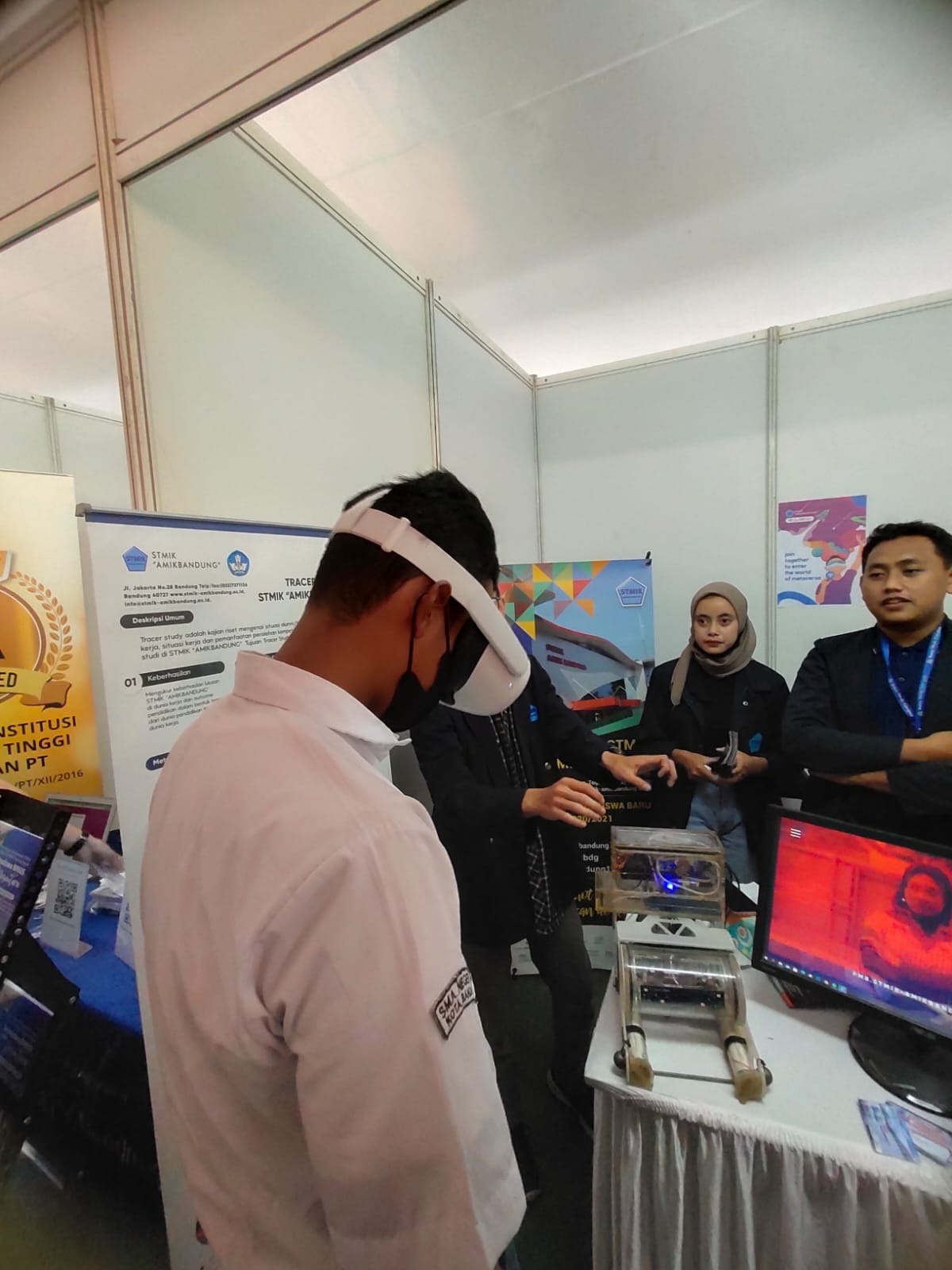
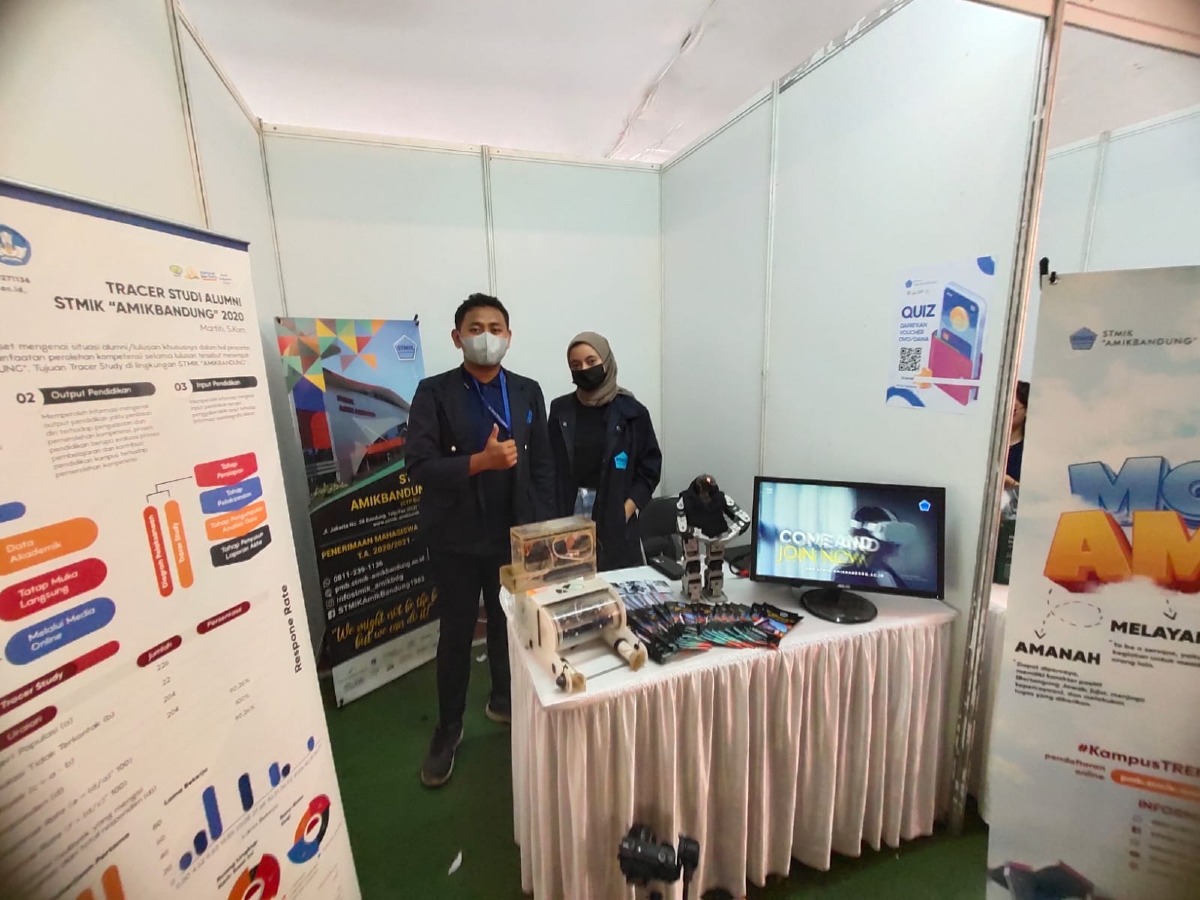
From the photos I documented during the event, our booth featured several technology-related devices and presentation materials.
There was a monitor used to display information or applications, some robotic devices, and equipment such as a VR headset, which was one of the more interesting parts of the exhibition.
The atmosphere was also very different from a normal college classroom.
In class, we usually sit, listen to lectures, work on assignments, or focus on our projects.
At an exhibition, we had to be much more active.
Visitors would come because they were curious.
Some asked questions about the project.
Others wanted to try the technology.
Some simply stopped by to look around before moving to another booth.
That experience taught me something simple but important:
A good project also needs good communication.
Learning How to Explain Technology to Other People
This is probably one of the things I remember most from the experience.
When we work on our own projects, we naturally become familiar with all the technical terms involved.
For example:
Programming
Database
API
IoT
Hardware
Software
Sensors
Artificial Intelligence
But not everyone visiting the exhibition understands these terms.
That meant we had to learn how to explain technology in simpler language.
Instead of saying:
"This system integrates hardware and software through..."
We could start with something much simpler:
"This project was created to solve X problem by using Y technology."
That small change can make a huge difference.
And looking back, I realize that this skill is extremely useful in the professional world.
Technology professionals don't always communicate with other technical people.
Sometimes we need to explain a system to:
Business stakeholders
Customers
Managers
Project teams
Non-technical users
Being able to simplify complex ideas is a valuable skill.
Learning the Importance of Teamwork
The exhibition also taught me a lot about teamwork.
A project is rarely dependent on just one person.
Someone may focus on the technology.
Someone else prepares the presentation materials.
Another person explains the project to visitors.
Someone needs to make sure the equipment is working.
Others help prepare the booth.
And someone might be responsible for documenting the event.
Everyone has a role.
This experience made me realize that in a project, collaboration can be just as important as technical skills.
Someone might be an excellent programmer, but a successful project still needs people who can communicate, present ideas, document information, and coordinate with others.
Things Don't Always Go According to Plan
Another interesting thing about an exhibition is that you can't always rely on ideal conditions.
When working on a project at home, in a laboratory, or in a classroom, we usually have more control over the environment.
But once the project is moved to an exhibition, things become different.
There are many variables:
Equipment needs to be transported.
Cables need to be organized.
Network connections may change.
Devices need to be configured again.
Visitors can arrive at any time.
The same project may need to be explained repeatedly.
These may seem like small things, but they provide practical experience that we don't always get from regular college assignments.
We learn how to adapt when things don't go exactly according to plan.
From Building a Project to Communicating Its Value
Looking back, I think this exhibition experience has a strong connection with the professional world.
During college, we often focus on:
"How do I make this project work?"
But in the professional world, the question often becomes:
"What problem does this project solve, and what value does it provide?"
That's a significant difference.
A technically impressive project may not be valuable if it doesn't solve a meaningful problem.
On the other hand, a simple solution can be extremely useful if it solves the right problem.
The exhibition was one of those experiences that helped me start looking at projects not only from the technical perspective, but also from the perspective of communication, benefits, and value.
What Did I Learn from the Technology Exhibition?
There are several lessons from this experience that I still find relevant today.
1. A Project Is More Than Just Coding
As technology students, it's easy to become too focused on coding.
But a project also requires:
Communication
Presentation
Documentation
Problem solving
Teamwork
Time management
Technical skills are only one part of the overall project.
2. Learning How to Explain Things Matters
No matter how impressive a project is, people may not understand its value if we can't explain it clearly.
Being able to explain something complicated in simple language is an extremely useful skill.
This applies not only to college exhibitions but also to:
Client presentations
Project meetings
Product demonstrations
Stakeholder discussions
Technical documentation
3. Don't Be Afraid of Questions
When presenting a project, questions from visitors can sometimes make us think beyond what we originally planned.
Sometimes, even a simple question can reveal that there is an aspect of the project we haven't considered carefully enough.
That's why I learned that feedback isn't something we should avoid.
Instead, feedback can help us see our project from a completely different perspective.
4. College Learning Happens Outside the Classroom Too
One of the things that makes college memorable is the opportunity to experience things beyond regular classes.
Joining exhibitions, building projects, participating in events, working with teams, and meeting new people all become part of the learning process.
Sometimes, these experiences are the ones we remember most after graduation.
Why Are Experiences Like This Important for IT Students?
For students studying Information Technology, Computer Science, Software Engineering, or other technology-related fields, participating in project exhibitions can be extremely valuable.
Not simply because you get to showcase your work, but because you get to practice:
Build → Explain → Present → Receive Feedback → Improve
Interestingly, this process is very similar to what we encounter in professional environments.
At work, we also build something, explain it to stakeholders, receive feedback, make improvements, and present the result again.
The context changes, but the underlying process is surprisingly similar.
An Experience Whose Value Became Clearer After Graduation
Interestingly, some experiences only reveal their true value after we leave college.
At the time, I might have thought of the exhibition simply as:
"Another campus activity that I need to participate in."
But looking back at it now, I realize that it provided a lot of practical experience.
I learned how to work as part of a team, communicate with visitors, explain technology, keep a project running, and present a project to people with different backgrounds.
These things may seem simple.
But they become surprisingly relevant once you enter the professional world.
Learning More Than Technology on Campus
When I look back at these photos, what I remember most isn't necessarily the devices or the exhibition booth.
It's the process behind them.
How the team prepared the project.
How we prepared the booth.
How we explained the project to visitors.
And how we handled situations when things didn't go exactly as expected.
That's one of the interesting things about studying technology.
We don't just learn how to build things.
We also learn how to work with people and explain what we've built.
Conclusion
Participating in the Technology and Scientific Work Exhibition during college was one of the experiences that I still remember today.
It gave me an opportunity to take a project beyond the classroom and present it in a more real-world environment, where the project had to be demonstrated, explained, and introduced to other people.
From that experience, I learned that building technology isn't only about coding or making a system work.
There are other skills that are just as important:
communication, teamwork, presentation, problem solving, and understanding the value behind a project.
Looking back, I believe college experiences shouldn't be measured only by grades or how many assignments we complete.
Some experiences may seem simple when we're going through them, but they can become some of the most valuable lessons once we enter the professional world.
Build something. Share it. Explain it. Learn from it.
And ultimately, experiences like this became part of my journey from being a technology student to entering the professional world.