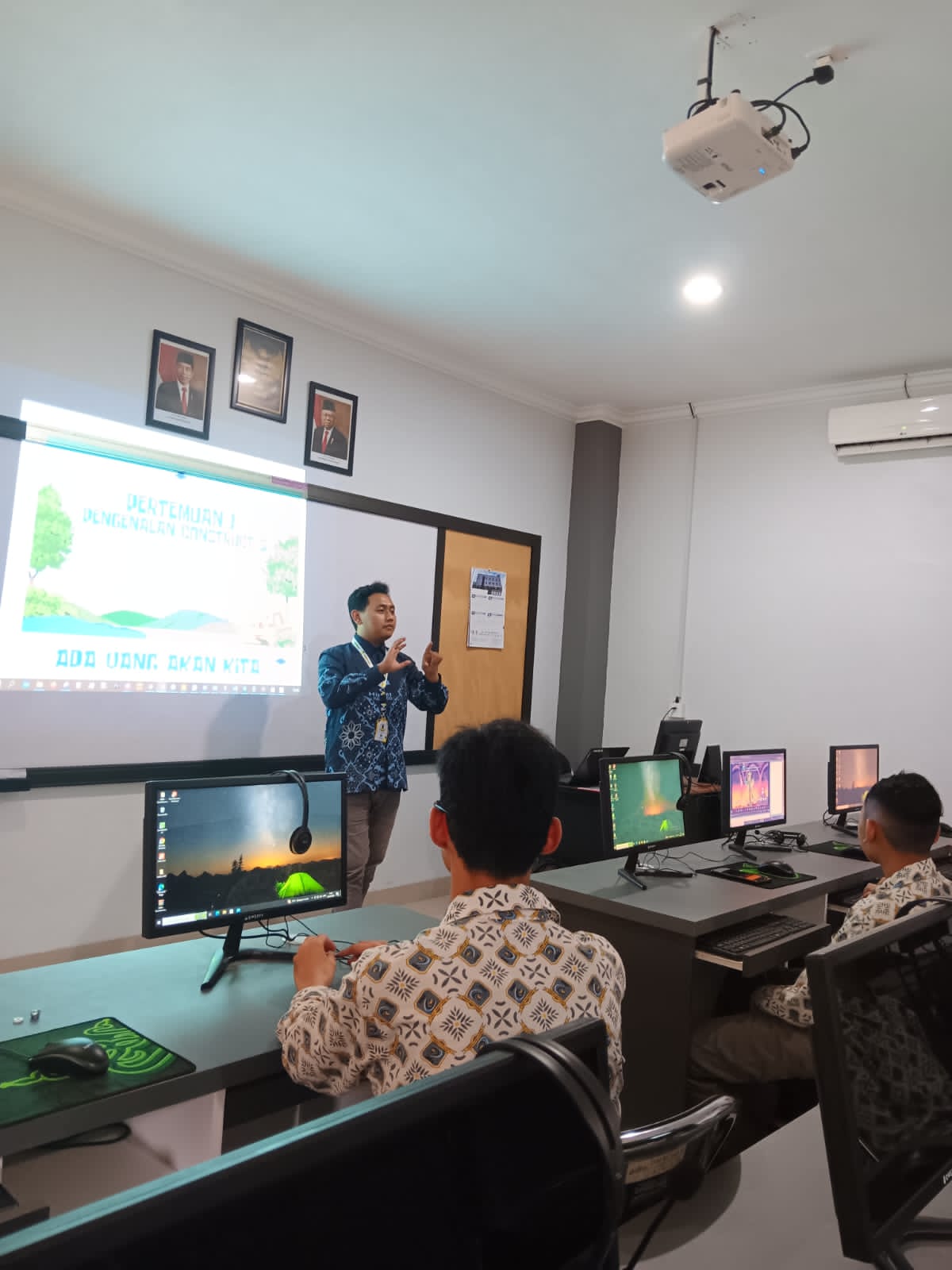

When I first started learning how to code, I thought becoming a better developer was mostly about one thing:
Writing better code.
Learn another programming language.
Understand another framework.
Build more projects.
Fix more bugs.
Learn another architecture pattern.
And repeat.
Over time, however, I discovered something I didn't expect.
One of the things that helped me improve the most as a developer wasn't building another application.
It was teaching coding to other people.
At first, I thought teaching would be mostly about explaining syntax and helping someone fix errors.
But teaching forced me to do something different.
It forced me to slow down.
It forced me to question what I thought I already understood.
And sometimes, it exposed gaps in my own knowledge.
That's when I realized:
If you can't explain something clearly, you may not understand it as well as you think you do.
Here are some of the biggest lessons teaching coding has taught me about becoming a better developer.
1. Teaching Forces You to Understand the Fundamentals
When you're coding by yourself, it's surprisingly easy to work around things you don't completely understand.
Maybe you copy an implementation from documentation.
Maybe you find a solution on Stack Overflow.
Maybe an AI tool gives you a working code snippet.
The application works.
Problem solved.
Until someone asks:
“Why does this actually work?”
Now you're stuck.
Teaching doesn't let you hide behind:
“It works.”
You have to explain the reasoning.
For example, it's one thing to use an API authentication middleware.
It's another thing to explain:
What is authentication?
Where does the token come from?
How is it validated?
What happens when it expires?
Why shouldn't the frontend be trusted?
Explaining those questions forces you to understand the concept more deeply.
And that knowledge stays with you.
2. You Learn to Stop Using Unnecessary Jargon
Developers love technical terminology.
Sometimes a little too much.
We say things like:
“This service is stateless and communicates through an asynchronous event-driven architecture using a message broker.”
Sounds impressive.
But what if you're explaining the concept to someone who has only recently learned what an API is?
You quickly realize that technical vocabulary doesn't automatically mean good communication.
Teaching taught me to ask:
“What's the simplest explanation that still remains accurate?”
Instead of:
“The service utilizes asynchronous inter-service communication.”
I might say:
“The services don't have to wait for each other. They can send a message and continue working.”
Same concept.
Much easier to understand.
That's a skill that helps not only when teaching, but also when working with clients, product managers, project managers, and non-technical stakeholders.
3. Teaching Reveals Gaps in Your Knowledge
This might be one of the most valuable lessons.
Sometimes you're confident that you understand a concept.
Then a student asks:
“Why?”
You explain.
They ask another:
“But why does that happen?”
You explain again.
Then:
“What if we change this?”
Suddenly you realize:
“Hmm... I actually need to think about that.”
Teaching exposes the difference between:
Knowing how to use something
and
Understanding why it works.
Those are not always the same thing.
You might know how to create a database index.
But can you explain when an index hurts write performance?
You might know how to use Docker.
But can you explain what problem containerization actually solves?
You might know how to call an API.
But can you explain the difference between authentication and authorization?
Teaching pushes you beyond memorization.
4. You Become Better at Breaking Big Problems Down
Programming is basically problem solving.
But beginners often see a large problem as one giant challenge.
For example:
“Build an e-commerce application.”
That sounds enormous.
A good teacher learns to break it down:
What is the first problem?
Maybe:
User registration.
Then:
Product catalog.
Then:
Shopping cart.
Then:
Checkout.
Then:
Payment.
Then:
Order management.
The same approach works when you're developing software yourself.
Instead of thinking:
“This project is huge.”
You start thinking:
“What's the smallest problem I can solve first?”
That mindset makes complex projects much easier to handle.
5. You Learn That People Don't Learn the Same Way
This was another big realization.
One person understands something immediately when you explain it verbally.
Another person needs a diagram.
Someone else needs to write code themselves.
Another person needs to see a real-world example.
For example, when explaining an API, one person might understand:
Client → API → Server
Another might understand it better when you say:
“Think of an API like a waiter taking your order to the kitchen.”
Both explanations describe the same concept.
But people absorb information differently.
As a developer, this matters because communication isn't only about what you say.
It's about whether the other person understands what you mean.
6. You Become More Patient With Beginners
This one sounds simple, but it's important.
When you become experienced in something, you forget what it felt like to be completely new.
A beginner asks:
“What's a variable?”
and your brain might think:
“That's basic.”
But to them, it isn't basic.
It's new.
Teaching reminds you that everyone has a starting point.
And that patience can improve how you work with:
Junior developers
Interns
New team members
Clients
Non-technical stakeholders
Being technically strong doesn't mean making other people feel stupid for not knowing something.
A good developer should be able to explain difficult concepts without making the other person feel uncomfortable asking questions.
7. You Learn to Ask Better Questions
Interestingly, teaching isn't only about giving answers.
It's also about asking questions.
Sometimes a student says:
“My code doesn't work.”
Instead of immediately fixing it, you might ask:
“What did you expect to happen?”
Then:
“What actually happened?”
Then:
“Where does the behavior start to become different from what you expected?”
This is essentially debugging.
And it works in software development too.
When someone reports:
“The system is broken.”
Instead of immediately jumping into the code, ask:
What exactly is broken?
Who is affected?
When did it start?
What changed?
Can we reproduce it?
Teaching helped me realize that good questions often lead to better solutions than quick answers.
8. Teaching Improves Your Debugging Skills
When someone else has a bug, you don't know their thought process.
You have to reconstruct it.
You ask:
“What were you trying to do?”
“What did you expect?”
“What happened instead?”
“What did you already try?”
That is almost exactly what happens when debugging unfamiliar code.
You learn to approach problems systematically instead of immediately changing random lines and hoping something works.
Over time, this improves your ability to investigate issues in real projects.
9. You Become More Comfortable Saying “I Don't Know”
This was probably one of the most valuable lessons.
When someone asks you a difficult technical question, there is a temptation to give an answer anyway.
But that's dangerous.
Sometimes the best response is:
“I don't know yet. Let me check.”
Teaching helped me become much more comfortable with that sentence.
Not knowing something doesn't make you a bad developer.
Pretending to know something you don't understand is much worse.
It also creates a healthy learning habit:
I don't know → Let's find out → Now I know.
That's how developers grow.
10. You Learn to Think From Another Person's Perspective
When writing code, you naturally think about your own implementation.
When teaching, you have to think about the learner.
What do they already know?
Where are they confused?
Which part is difficult?
What assumption did I make that they don't understand?
This mindset is surprisingly useful in software projects.
For example, a developer might think:
“The feature is obvious.”
But the user might think:
“Why is this button here?”
A developer might think:
“The API response is perfectly structured.”
But the frontend team might think:
“Why do I need five requests to display this page?”
Learning to see software from another person's perspective makes you a better engineer.
11. You Start Writing Better Documentation
Teaching and documentation have something important in common.
Both require you to answer:
“What does someone need to know to understand this?”
After teaching, I became more aware of how frustrating undocumented software can be.
A good README should answer:
What is this?
Why does it exist?
How do I run it?
How does it work?
What are the important limitations?
The same goes for API documentation and technical guides.
Teaching made me realize that documentation isn't just writing.
It's a form of knowledge transfer.
12. You Stop Optimizing for Clever Code
This one took time.
When you're learning, clever code can feel impressive.
Shorter code.
Complex abstractions.
Fancy patterns.
But when you're teaching someone, unnecessarily clever code becomes difficult to explain.
That made me appreciate something more important:
Readable code.
Code isn't only written for the computer.
It's written for humans who will maintain it later.
Sometimes the best solution isn't the cleverest one.
It's the one another developer can understand six months from now.
13. You Realize That Simplicity Is a Skill
Teaching made something very clear to me:
Simple explanations are hard to create.
Anyone can make something sound complicated.
The real skill is taking a complicated concept and explaining it simply without making it inaccurate.
The same principle applies to software architecture.
It's easy to add another service.
Another abstraction.
Another layer.
Another framework.
The difficult part is asking:
“Do we actually need this?”
Teaching reinforced the idea that simplicity isn't the absence of technical skill.
Sometimes simplicity is the result of deep understanding.
14. You Become a Better Communicator
At some point, developers realize that technical skills aren't enough.
You may be excellent at coding.
But software projects involve people.
You need to communicate with:
Developers
Designers
Project managers
Product managers
Clients
Business teams
Users
Teaching gives you repeated practice explaining ideas clearly.
That makes it easier to communicate:
“This feature will take longer because it affects three existing systems.”
instead of:
“There's a lot of backend stuff involved.”
The first statement creates understanding.
The second creates more questions.
15. You Learn More When You Teach
This is probably the biggest lesson of all.
Teaching creates a feedback loop:
Learn → Explain → Get Questions → Discover Gaps → Learn More
The process never really stops.
You teach something.
Someone asks a question you didn't expect.
You investigate.
You discover a deeper concept.
You update your understanding.
And next time, you explain it better.
That's continuous learning in practice.
You Don't Have to Be an Expert to Teach
One misconception is that you need to know everything before teaching.
You don't.
You just need to know enough to help someone move forward.
In fact, teaching something shortly after learning it can be incredibly useful.
You still remember:
What confused you
What mistakes you made
Which explanations helped
Which concepts felt difficult
That perspective can make you a better teacher.
And eventually, a better developer.
What Teaching Changed About My Definition of a “Good Developer”
Before teaching, I might have defined a good developer as someone who:
“Writes clean code and understands many technologies.”
Now I'd define it differently.
A good developer should be able to:
Solve problems.
Understand why their solution works.
Explain technical ideas clearly.
Ask good questions.
Learn continuously.
Work well with other people.
Keep complexity under control.
Those skills go far beyond syntax.
Final Thoughts
Teaching coding taught me something I didn't expect:
Becoming a better developer isn't only about learning more technology.
It's also about learning how to think, communicate, simplify, and understand problems from different perspectives.
When you teach, you discover what you actually understand.
You discover what you don't understand.
You learn to explain complicated ideas.
You become more patient.
You ask better questions.
And you learn to look at your own code from someone else's perspective.
That makes teaching much more than a way to help someone else learn programming.
It becomes a way to improve yourself as a developer.
So the next time a junior developer, friend, colleague, or student asks you how something works, don't just give them the answer.
Try teaching it.
You might be surprised by how much you learn in the process.
Looking for a Developer Who Can Do More Than Just Write Code?
Good software development is not only about writing code. It is about understanding problems, communicating clearly, making practical technical decisions, and building solutions that people can actually use.
I work across web development, backend systems, APIs, software architecture, and digital products, and I'm open to freelance projects, technical consulting, and collaboration.
Whether you have an idea that needs to be turned into a working product, an existing system that needs improvement, or a technical problem that needs a second perspective, let's discuss it.
Have a project in mind? Let's build something practical together.
What has teaching, mentoring, or explaining technology taught you about becoming a better developer?